member of:Observers of the Interdependence of Domestic Objects and Their Influence on Everyday Life


This group has been active for a long time and has already made some remarkable assertions which render life simpler from the practical point of view. For example, I move a pot of green color five centimeters to the right, I push in the thumbtack beside the comb and if Mr. A (another adherent like me) at this moment puts his volume about bee-keeping beside a pattern for cutting out vests, I am sure to meet on the sidewalk of the avenida Madero a woman who intrigues me and whose origin and address I never could have known...
--Remedios Varo


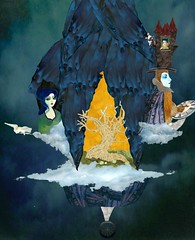
(Slideshow is of Artwork by Remedios Varo)
By believing passionately in something that still does not exist, we create it. The nonexistent is whatever we have not sufficiently desired.
--Franz Kafka

Showing posts with label Dream detective. Show all posts

Tuesday, June 19, 2012

Not Defeated: Humans, Non-Humans, and Sveta Dorosheva

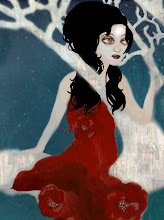
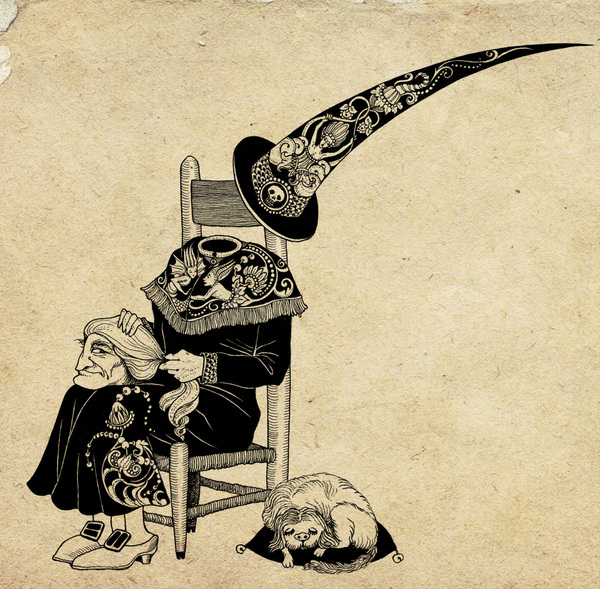
Image by Sveta Dorosheva

"In those days, the world of mirrors and the world of Man were not, as now, isolated from each other. What's more, they were distinct; neither the beings, nor the colors, nor the forms were the same from one world to the other. Both kingdoms, the specular and the human, lived in peace; one could pass through any mirror as a doorway between them. One night, the people of the mirror invaded Earth. Their force was great, but after many bloody battles, the magical arts of the Yellow Emperor prevailed. He pushed back the invaders, imprisoned them in the mirrors, and forced them to repeat, as if sleep-walking, all the acts of Man. He took from them their strength and their form and reduced them to mere servile reflections. Nevertheless, one day they will shake themselves from this magical slumber. The first to awake will be the Fish. In the depths of the mirror, we will note a fragile line, and the color of that line will be one like no other. The other forms will follow. Gradually, they will differ from us; gradually, they will cease to imitate us. They will break the barriers of glass or metal, and this time, they will not be defeated..."
--Jorge Luis Borges (my translation)
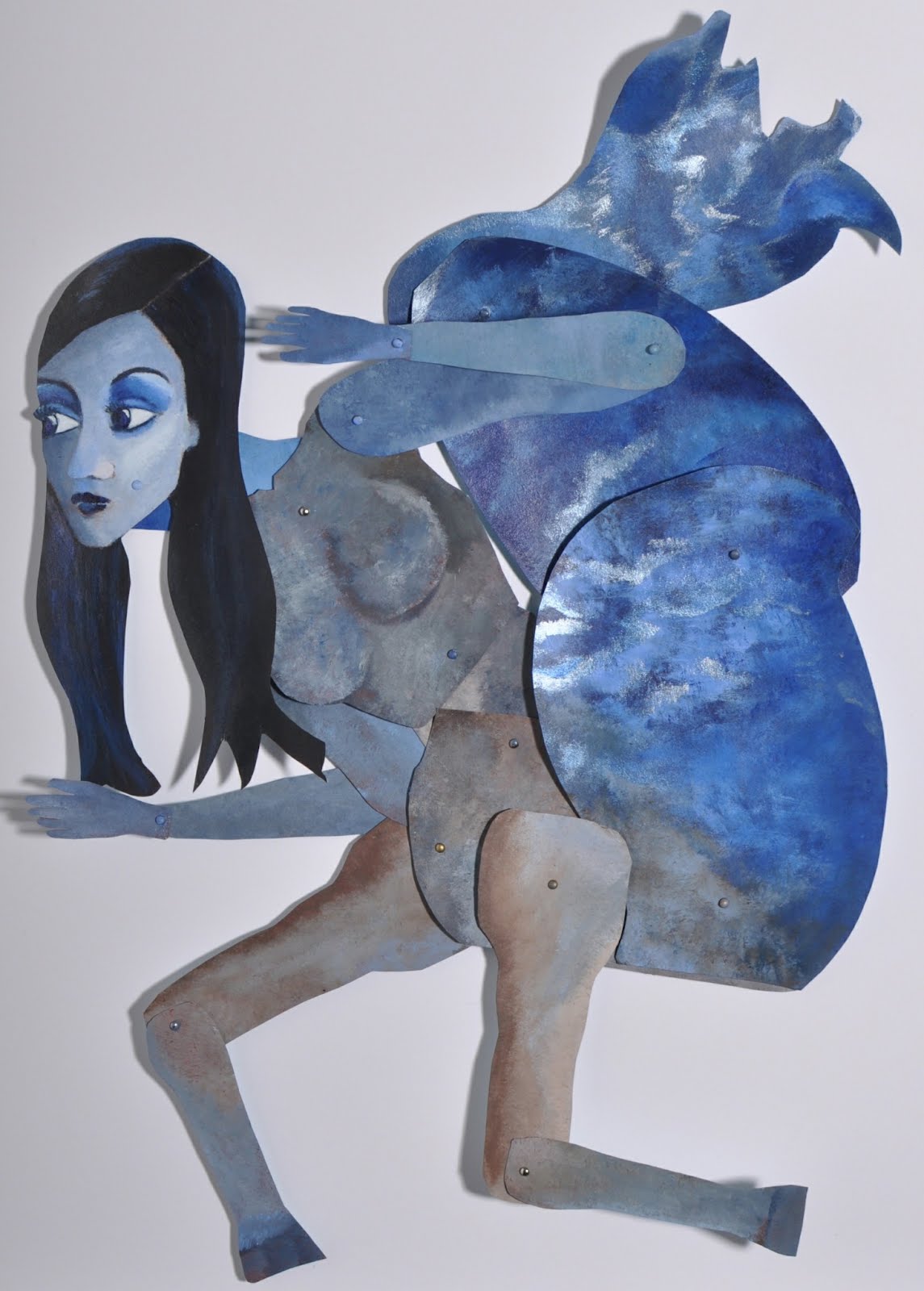


Maquette (by zoe) in the style taught by Clive Hicks-Jenkins


I've worked with this idea before, with the idea that the creatures behind the glass that he's describing, endlessly repeating the actions they see in front of them, endlessly *being* whatever they see in front of them----that those creatures are humans. Us. That we are the ones trapped in the glass, enchanted.

Borges' yellow emperor tries to keep us all the same--automatons who endlessly repeat what we see and slavishly hold to habits built before we were really conscious, when we should instead be protean, ever-shifting and changing--that is the way one lives forever (your atoms constantly shifting into other things)... a habit just has to end, at some point.

In the book Moonwalking with Einstein, Joshua Foer delves into the history of the Ars Memorativa (see link to side and also previous posts for more on the topic) during his year-long study with modern masters of that technique. He describes a patient of A.R. Luria, a Russian journalist referred to in psychological literature as S., who had an incredible, incredibly speedy memory, just by nature. His memory was so amazing, his boss pushed him to get it studied. Luria discovered that S. would see an image for every word he heard, so that the word blue would immediately put into his mind a blue flag waving from a window, and the word red instantly translated as a man in a red shirt walking towards him. Every word yielded an image, and those images held together to solidify everything he heard--to transform, as if liquid to ice, wisps of thought and the rhythms of sound into solid experiences. And so it was that he was constantly dreaming--he was awake and experiencing this life but also dreaming the symbols of meaning, right there as he spoke to you or walked or shopped for groceries. This is what the rest of us do at night, while we're sleeping, while our bodies rest and we close our eyes to keep out new information: our minds translate the events of the day into symbols that make up our internal landscape, our mind-map; it makes bizarre and fascinating and sometimes embarrassing associations (like the kinds the memory masters recommend you make when you're trying to create mnemonics), thus solidifying your memory (which isn't to say you will, without effort, easily be able to pull that knowledge into your conscious mind, later). S. dreamt while awake.

If you study your dreams, you discover those bizarre associations, you uncover why your mind made them, and you learn something much deeper about yourself.

This means that we are creatures who learn by dreaming. What could be more wondrous?
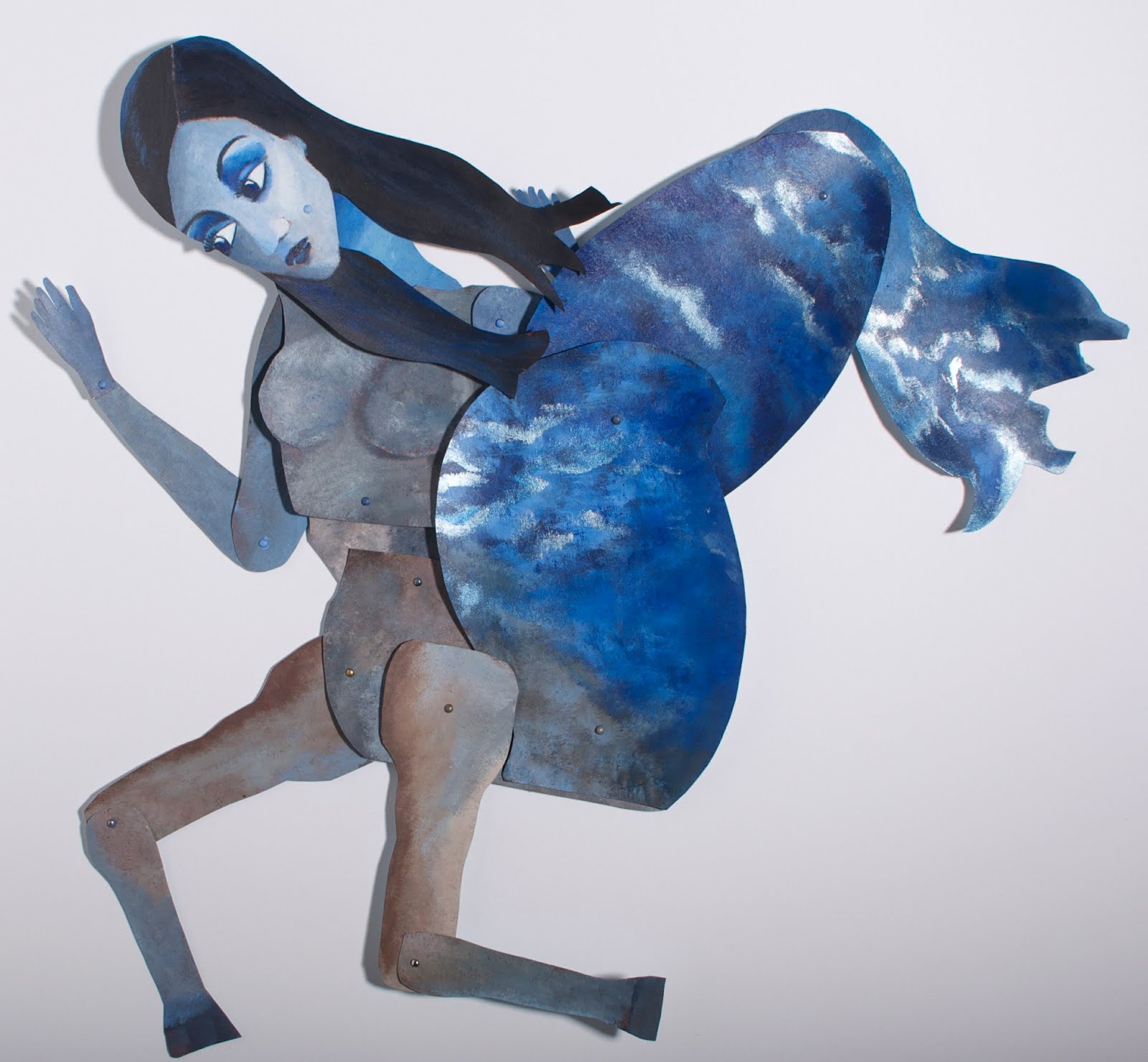


Maquette Pose II


II

Ars Memoria, or Ars Memorativa, the Memory Arts, they teach us that to remember something, we must really, really know it. And they recommend a process much like what S. did naturally.
Here is the technique, as explained by my "dream detective" (whom you may remember from HERE), Nick, to Chloe, his co-worker, and Helena, their client, who has suffered a blow to the head that gave her amnesia (obviously one of his more wordier moments):

“I have discussed with you before the Ars Memorativa. This activity will elaborate my point.” I lick my lips. “And hopefully resolve many more of our issues.” I pause to savor the flavor whiskey has given my coffee.
...
“Indeed. The Art of Memory. Memory being both the house of recall and the source of creativity. The idea is that we must truly know something in order to remember it well. The information becomes a solid prop in our minds, available for shifting, turning, placing next to other objects, and standing on its head. One mundane object, a blandly everyday sort of knowledge, stood on its head, might then yield a great invention. So, how do we come to truly know something? We translate it. Say I want to remember a particular experiment run by a particular scientist named Charles Tart. I will create a house for this knowledge, or better, use a building or an area I am familiar with--even a garden, or a walk I go on often.
Say I’m using my office building. I start at the front door. Charles Tart is entering--how will I make his entrance memorable, and how will I make his name memorable?  I might think of Prince Charles, doing something lewd or violent or ridiculous. Or I might use the name Chuck, and turn our scientist into a woodchuck 
(photo of a woodchuck taken from the Dover Library Site)

“--yes, and the woodchuck, instead of chewing wood, is munching on a tart. What flavor of tart...?” My mind revels in the possibilities. I sniff at them cautiously. “Granny Smith Apples,” I exclaim, “which are, themselves, tart! So, a little woodchuck, munching on a tart tart is at my front door.” I spin to Chloe. “Or do you prefer Prince Charles with a famously trashy tart on his arm?”
“Apples,” she answers calmly. “Because many other words might come to mind with the other image.”
I grin at her appreciatively. “You are a natural talent for this, as I have said many times.” I swivel back to Helena, giving her full eye treatment. I am talking about hypnosis, after all.
“Charles Tart has run many studies of hallucinated realities, especially of the consensual sort, which is the research I’d like to put in my office here, so let’s put our woodchuck in a tie-dye t-shirt. Everyone game?” 
Helena stares at me warily.  
“Helena doesn’t know our offices,” Chloe points out. 
“This is true,” I close my eyes and take another swig of coffee. “Your point prevails. We’ll use this cafe. At the front door is a woodchuck in a tie-dye t-shirt munching on an apple tart. His eyes are running from the tartiness of it. His little nose scrunches in on itself. He smells like wet animal, but that smell is being just slightly overpowered, right now, by the wonderful, heavenly smell of baked pie crust and hot apples.” I breathe in deeply. “Are we all together?” There is no answer, so I open my eyes.
Oddly, both ladies wear the same non-expression.
“OK,” I gather my thoughts. “The woodchuck comes in, but no one sees him, because no one expects to see him, because he is a woodchuck. He jumps up and down excitedly at the sight of so many people who could be his friends, but still no one notices him. He gets upset. His tart is crumbling. So what does he do?”
These identical faces look back at me.“Come on,” I plead with Chloe. “He’s upset. He wants to see a psychiatrist, to discuss his pain. So we’ll put Freud in the room--he was willing to see all kinds of strange and unexpected things, right? Freud sees him. Freud is sitting,” I spin on my stool away from the window bar and towards the room, and the girls slowly follow, “there.” I point to the big, black leather couch in the corner. “Freud is on the couch, get it?” I grin, but don’t wait for any boring non-responses. “Freud waves our antsy woodchuck over, swings his legs down and leans far over so that his head reaches the head of the woodchuck, and gazes into his eyes. ‘You are getting very sleepy,’ he says. ‘Very, verrrrry, sleeeepy.” I draw the words out, making a little hum afterwards. “Watch the woodchuck’s eyes grow rounder and rounder, maybe they spin in circles, and the last of his tart crumbles to the floor. Why?” I pounce, to see if anyone’s listening.
“Because he’s losing his ego,” Chloe drawls.
“Ah!! The lovely Chloe!” I cry. “Do you follow?” I check with Helena.
She nods and drinks her coffee, not looking at me. That’s ok. I’m used to working like this. And I didn’t always have a lovely assistant.“So, the tart is crumbled on the floor, his eyes are spinning, and he wheels on his heel and touches the closest person, who frowns, trying to figure out what just altered in her universe. Pay attention, now. He has seemingly only chosen the closest person, but if you look carefully, you will see he has very cleverly selected the loveliest, bustiest woman in the cafe. She is wearing a bright red dress with amazing cleavage. Her lipstick matches the dress, and her hair is jet black. She has dazzling eyes. They are green. Her dazzling green eyes look down to see what is grasping her arm. The woodchuck says, ‘You are getting sleepy, verrrry sleeeepy.’”I pause only for effect, but Chloe jumps in. I knew she would like this game.
“And her red dress falls to the floor,” she smirks. “In a pile right next to his tart. Because she’s lost all ego-concerns, and has returned to her natural state of oneness with the universe.”Helena is not looking at either of us. She has her entire face crammed into her coffee cup, like she might just disappear inside.
I clap Chloe on the back appreciatively. “Well done. Indeed. Is anyone going to forget what we have so far?”
Helena makes a snorting noise into her cup. Is there even coffee left in there? Is she trying to lick the bottom?
“I can wait, if you want a refill,” I offer.
She puts the cup down, her face red.
“The point of the exercise is to make all the pieces unforgettable. When you’re doing it yourself, you don’t have to worry what others might think, and you will find, also, that once you get into the meat of what you’re trying to remember, the way you order things hones your knowledge of the material. The ancients used this method, for example, to memorize speeches or long, culturally important stories. Some users, especially in the time of Giordano Bruno, believed that they could alter their physical reality--we will get to that in a moment, although the very example we’re using here is an altering of reality. Let’s finish up.” I take a deep breath.“The woodchuck, in his own mind, is, of course, a most handsome prince. He owns a large castle, right next to the ancient oak right across the street there,” I swivel back to the window and point. I swivel back to the room. “In his mind, he is walking with the lovely lady back to his castle. Now, here’s the trick that Charles Tart discovered. Our little hungry woodchuck, who let’s not forget is in real life quite the scientist, ran some tests with college students and discovered that, A, one hypnotized person can hypnotize another person, and B, when that person does so, those two people share the same hallucination. The two college students in this landmark test went to an island and spent time on the beach together, having conversations without opening their physical mouths, and they both returned to normalcy and relayed those conversations in full detail to the scientists separately. Without time to discuss them beforehand.”
“You’re making this up,” Helena states flatly.
“Absolutely not,” I respond firmly. “Western science, my dear. The brain is an amazing world. You can look it up when you get home. In fact, please do. Now, for the Ars Memorativa, we would go through the cafe, putting details of his study in various loci, always moving in a sensible direction, on a path which we would then be able to easily follow anytime we wanted to review our knowledge of the subject. For example, in this cafe, we might start at the front door and go counterclock-wise, always, in our minds, when we are reviewing the information. That way, one thing leads to another. This way,” I point at Chloe, behaving as pedantically as possible, “you won’t have to carry that hideously, monstrously massive text with you everywhere you go. It can be displayed, like proper art, on your desk or your mantel. For the other problems at hand,” I swivel back to Helena, noting that my constant swiveling has been causing her some jumpiness, “we will take a sort of backwards use of this process..."
III

This is also, basically, what an artist does: re-pairs symbols in previously un-thought-of ways to make us perceive something in our reality we have started to forget or ignore, through habit.

As Ernst Gombrich says (quoted in The Age of Insight), the biological function of art is "rehearsal, a training in mental gymnastics which increases our tolerance of the unexpected."
So that we can see more, even things and beings whose existence don’t fit within the confines of our conceptions of reality (like a woodchuck in a tie-dye t-shirt, entering the cafe eating a tart apple tart). Because science shows us (see http://zoe-in-wonderland.blogspot.com/2009/06/perceived-reality-part-iv-dont-let.html Missing the Gorillas) that what falls outside our expectations falls outside our vision. We miss it completely.

In Age of Insight, Eric Kandel credits Freud with showing that we are largely driven by unconscious forces, habits we learned in very early childhood. Modern biologist Bruce Lipton explains now that we act with our conscious minds less than 10% of the time. Gurdjieff, a philosopher in the 1900s, expressed a similar idea, only with a mildly creepier tone: that we are as automata, only alive in the barest sense, and acting automatically and without thought in general--almost always. Remedios Varo, a student of Gurdjieff, often explored this idea in her paintings:
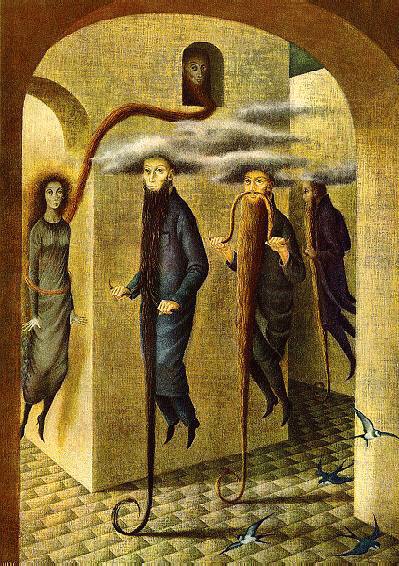


(Above and below: Images by Remedios Varo)
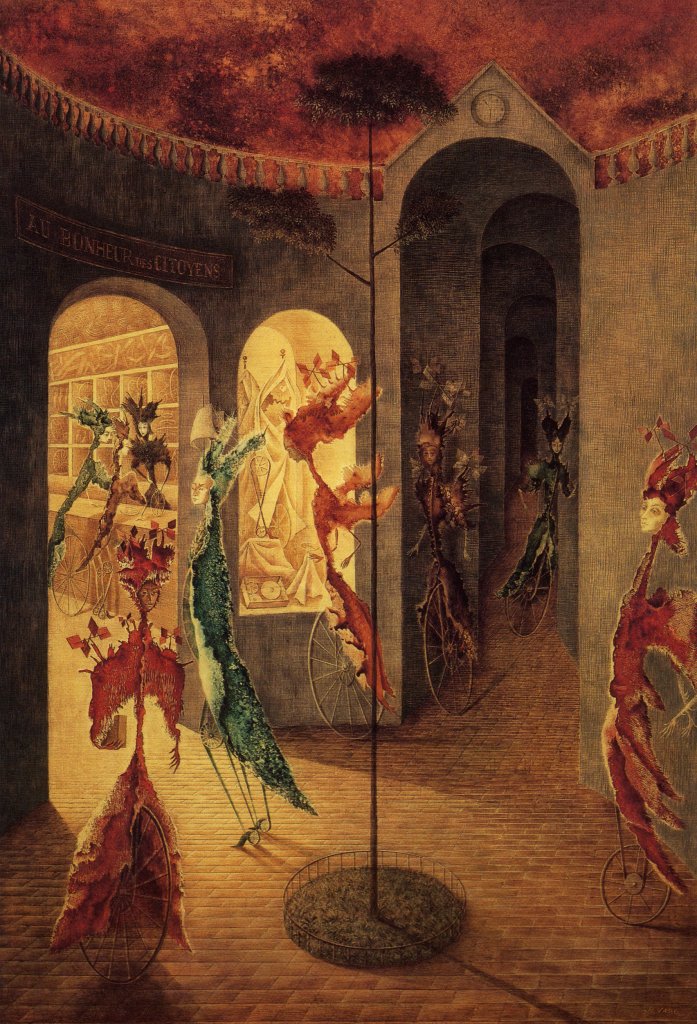


And she claimed to be a member of a group called Observers of the Interdependence of Domestic Objects and Their Influence on Everyday Life, which she described as follows:

“This group has been active for a long time and has already made some remarkable assertions which render life simpler from the practical point of view. For example, I move a pot of green color five centimeters to the right, I push in the thumbtack beside the comb and if Mr. A (another adherent like me) at this moment puts his volume about bee-keeping beside a pattern for cutting out vests, I am sure to meet on the sidewalk of the avenida Madero a woman who intrigues me and whose origin and address I never could have known...”

That idea goes straight back to the Ars Memoria. Many people in history thought that these arts could be used in a magical sense, to somehow give the student special power in the physical universe. How? By doing what an artist does, by doing what Remedios suggests above. By doing what Luria’s patient S. did: 


“Let’s say I’m going to the dentist...I sit there and when the pain starts I feel it...it’s a tiny, orange-red thread. I’m upset because I know that if this keeps up, the thread will widen until it turns into a dense mass...So I cut the thread, make it smaller and smaller, until it’s just a tiny point. And the pain disappears” (32, Moonwalking with Einstein).

Just like that, he changed his physical reality.

So, how do we become less automatic beings? How do we grasp more of our power, see more of our surroundings, enjoy more of our lives? By doing something that puts what we “know” on its head. By seeing differently.

Well, slightly more:

There’s another case, just as striking, described in Age of Insight, of Josef Breuer’s patient Anna O. (Bertha Pappenheim), who suffered a loss of sensation and left-side paralysis, as well as speech and hearing problems. The description is written by Freud:

“In her waking state the girl could no more describe than other patients how her symptoms had arisen, and she could discover no link between them and any experiences of her life. In hypnosis she immediately discovered the missing connection. It turned out that all her symptoms went back to moving events which she had experienced while nursing her father; that is to say, her symptoms had a meaning and were residues or reminiscences of those emotional situations. It was found in most instances that there had been some thought or impulse which she had had to suppress while she was by her father’s sick-bed, and that, in place of it, as a substitute for it, the symptom had afterwards appeared. But as a rule the symptom was not the precipitate of a single such ‘traumatic’ scene, but the result of a summation of a number of similar situations. When the patient recalled a situation of this kind in a hallucinatory way under hypnosis and carried through to its conclusion, with a free expression of emotion [italics mine], the mental act which she had originally suppressed, the symptom was abolished and did not return. By this procedure Breuer succeeded, after long and painful efforts, in relieving his patient of all her symptoms.”
It’s not just noticing the symbols--it’s immersing yourself in the emotion of a scene, and immersing yourself in the motion of change.
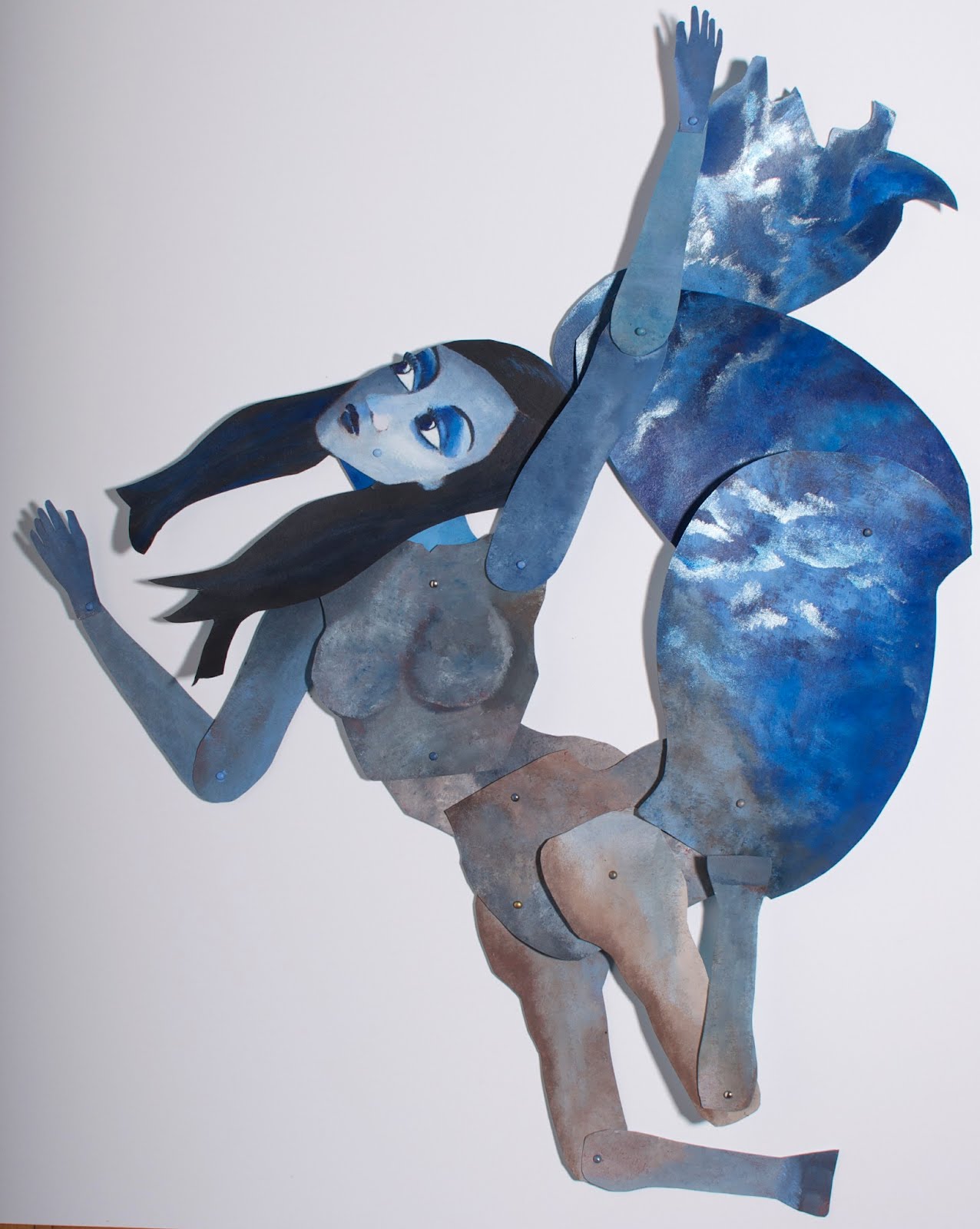

(Maquette, Pose III)
IV
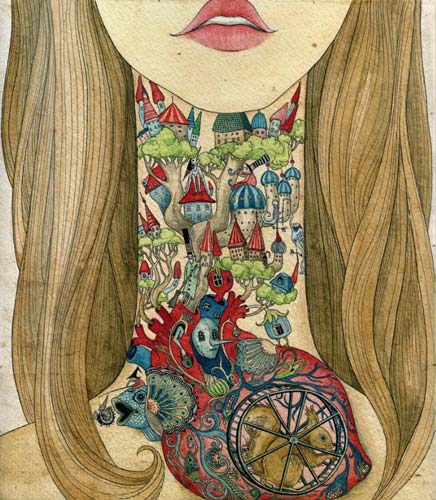


(above image by Sveta Dorosheva...Is this how we tell a story? It just all comes out, alive...)


Now, another thing I am thinking about as I work on the composition of this painting, is the artwork of Sveta Dorosheva. She has been working on a book for about three years about the human world, “as seen through the eyes of fairy-tale creatures. They don't generally believe in people, but some have travelled to our world in various mysterious ways. Such travelers collected evidence and observations about people in this book. It's an assortment of drawings, letters, stories, diaries and other stuff about people, written and drawn by fairies, elves, gnomes and other fairy personalities. These observations may be perplexing, funny and sometimes absurd, but they all present a surprised look at the things that we, people, take for granted." (Source)


(illustration by Sveta Dorosheva, matched with the Ben Franklin quote: "Man is an animal capable of producing tools.")


This is the idea: to become less automatic, because we are no longer taking ourselves and the world for granted. To be surprised, always, and attentive in that surprised way. Here is a non-human asking, What is a human? For an answer, he has Ben Franklin’s quote. And what image does that create for this non-human?
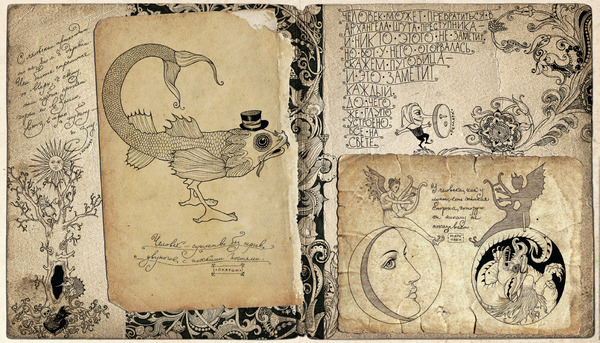
(above image by Sveta Dorosheva)

Or he turns to Plato, who says: “A man is a two-legged creature with flat fingernails and no feathers.” See it, above?
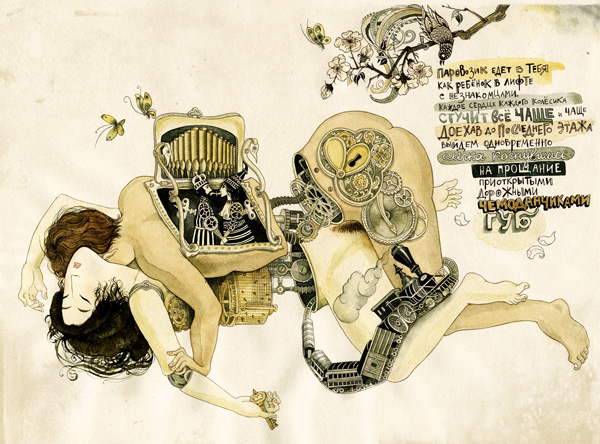


(Above image by Sveta Dorosheva)

And above? You see the mixing of flesh, or carnal activity, and machinery: opening the rib cage, you have the habit behind this act, the fairy-tale, wind-up act of love passed down through the stories of the ages-- to begin events, the woman unlocked the man with the key in her right hand. So. Will they become more than that? Of course they will ;) This isn’t a nightmare!

So, back to Borges: why a fish? Did we really evolve from the sea? Arise out of the swirling depths, the chaos, slithering until we grew feet and stood up? Could we go back? Will we ever learn to breathe in water as we do in air, thus greatly enlarging the world we can be part of? After all, our bodies are largely water! But we need land and sea, the reclining grace of a mermaid but also the forceful gallop of a horse, charging ahead. And then we need the clock parts from which we are tearing free, we need to see them flung to the side. The truth is (right now, to me): we are not, any of us, just one thing--that thought needs to strike me two or three times, each time I make a decision, every time I breathe. Everything I look at, I need to be able to see from several directions, and I can't really do that from just one mind, so I have to learn to share that space in my cranium. With, as Walt Whitman said, the multitude that I am...


Friday, December 2, 2011

Artnap V: Noir


Acrylic on panel.
“Amnesia is noir’s version of the common cold.”—Lee Server
This is part of a series of illustrations to go with a story of detection the lovely and talented Vesna is writing (you can see previous hints here ). In the story, the femme (a painter) has an internal conflict: she wants something, but she subconsciously subverts herself, which I think is a pretty common problem for people… In her case, there is a little issue of “forgetting,” which is the tool her subconscious uses. In that, the dark, labyrinthine qualities of the american noir cityscapes match the anfractuosity of the human brain, where what we want and what we think we want get twisted and confused and the bad “map” that creates for us runs us into walls and off of cliffs.
But not here. Here, for reasons that will become clear later, the artistic force of the painter/dreamer and the special vision of the detective will overcome the twisty darkness of the landscape in a way that the fatalism of classic noir film characters could not. The success has to do with seeing beyond (more than) what’s “there”; with the particular song of your heart and your willingness and ability to hear it and express it; and with a little bit of magic craziness (that’s the cat). Who is catching whom? I don’t know. But together, they will pull the light from behind the curtain….


ALSO
For those of you who are even mildly interested in the cafe mentioned in the last post, the rules are slackening slightly. You would have 50 pages, give or take, and it doesn't have to be from one long work. As long as it's cohesive, it can be a collection of works.
Also, each round will be only one week, only one exchange. If you have any other suggestions, I'm game!

AND
there's an excellent writer's game we've tried on Continuum-Art (link to the side) before that was fun, and it has been picking up steam on the red bubble site. Throughout the day, you add five words to the story. What's already there (109 pages!) is pretty hysterical, though it sort of lacks a plot :D
Here it is.
I recommend joining in.
That's it!


Wednesday, January 27, 2010

Sophie, Part II (From Views of a Crime)

Previously...
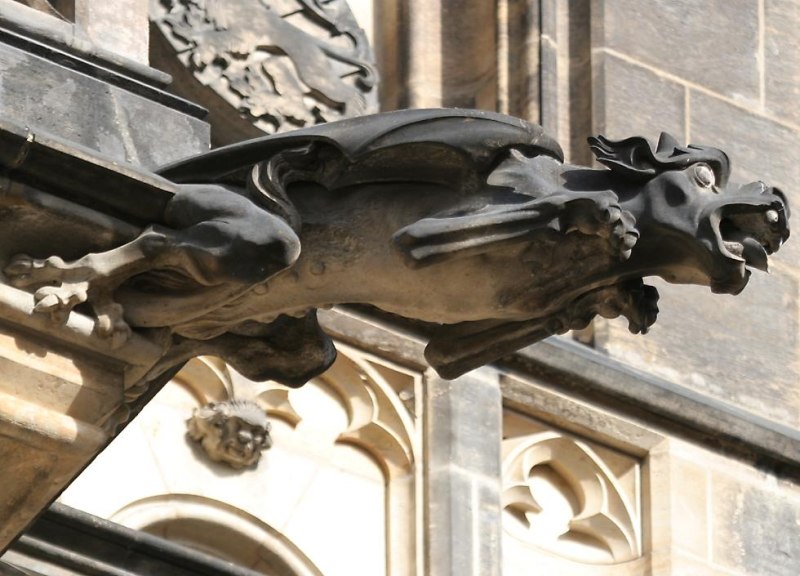
(The images in this post are all gargoyles--protective monsters--on the cathedral of St. Vitus in the Czech Republic. St. Vitus is the Saint one calls on for protection from disorders of oversleeping...)
Fiction by Zoe Jordan.


Mordac


eucharisto:
by eucharisto


Then I wake up in the hospital. My head is nodding, an act which seems purposeful but doesn’t have anything to do with me. Everything is bleary and super-white at the same time, and I can’t really tell what’s going on, but there’s a definite hospital-vibe, and some major part of my psyche seems to just accept that.

“There’s absolutely no reason to get so upset, dear,” comes out of my mouth. I rub the gunk from my right eye and cough, suddenly, and violently. Solid hands lift me and pound my back, and I get a fleeting moment of déjà vu.

“Thanks,” I rattle. I clear my throat.

A man in a white lab coat appears in front of me with a glass of water.

“Better?” he asks, as I tip the glass up.

I take a few careful sips and set the glass down gently in his hand before I nod and thank him. I try to pretend he isn’t gazing at me intently. He doesn’t seem to get the hint.

“Yes?” he prods.

“Um,” I manage. My throat clears a little more.

He smiles, his eyes crinkling up. “Good morning.”

I close my eyes.

“No, let’s stick with this for a moment, please.” I feel him standing over me and open my eyes to see him waving a mini-flashlight around in little circles. He clicks it on and guides it towards my eyes. “Follow the light. Good...I’m Dr. Vukovic. Can you tell me your name?”

“Sophie Oaks.”

“Very good, Ms. Oaks, do you remember what happened?”

“I think...I fell?”

He straightens up, slips his flashlight into his pocket, and smiles again. “Fell asleep, it sounds like. Your friend couldn’t wake you up.”

I try to sit up too quickly, and the entire back of my head complains. “Oooh,” I moan.

“Yep, you’ve got a really good knot there,” he says, a little more cheerfully than I would have. “Apparently, you weren’t seated properly when you fell asleep. Have you ever been treated for a sleeping disorder?”

I hold my head still. “No.”

“Anyone in your family have diabetes?”

I pause. “Is Liv...here?”

He waves towards the space behind him. “She just went to check on her brother. She’ll be back by at some point.”

“Her brother’s asleep,” I say quickly, before he can continue.

He pauses, his expression changing slightly. Somewhere, way back in my animal brain, I am already praying. Not the words, but the rhythm. I can feel it, waves lapping at the shore. If I can just get out of here and get home, I will figure out a way to fix this.

“Family diabetes?” he tries again.

“Not that I know of,” I tell him. “Is he going to be Ok, her brother?”

He writes something down on his clipboard. He has dark hair, with just a few streaks of grey, and it’s just long enough that it slides down slightly when he dips his head to write.

“We certainly hope so,” he answers, after a moment. “How old are you?

“I’m 18. Are you his doctor?”

“I am,” he says brightly, looking up again. “I’m going to need a phone number--mother’s, father’s?”

“Why?” I scrunch up my nose, trying to look simply annoyed. “I’m an adult.”

“And very responsible, I’m sure,” he responds, still smiling. “But I need a medical history, and it looks like I might have a hard time getting it from you.”

“What for? I’m Ok, I just need to go home and get some rest. I’ve been studying too hard. Scary exams,” I brush it all off with one arm, carefully keeping my head still.

People who are new to prayer have to concentrate on it in a way that makes them unable to do anything else at the same time. Or they feel it’s disrespectful to do something else while you’re talking to God. But for me, it’s like breathing. The worst thing about waking up in these strange places, not understanding how I got there, is those first few, extra-long minutes when I really don’t know who I am, and there’s this yawning silence. Nothing belongs, the ground isn’t solid. When you first come into the world, and your heart isn’t beating, and you’re enveloped in this over-bright sensory overload, that’s what I’m experiencing in those moments. I don’t walk right if I’m not praying. It’s a groove, a path I fit into. Right now, I can feel that rhythm, starting somewhere inside me, but for some reason, it’s still not connecting with the outside world. This man in front of me, he nods his head, and it’s completely out of sync.

“Waking up hugging a filthy toilet doesn’t scare you?” he asks pointedly.

Traitor. “I’ll lock my door and hide the key,” I smile at him winningly. A wave of nausea threatens.

He sits down on the edge of my bed. “What is the problem, exactly, with the subject of diabetes?”

I start to shake my head but think better of it.

“Sophie?”

“I don’t know,” I tell him. “I don’t know my parents. So I can’t tell you any family history. I’m sorry.” I try words, starting with Our Father. Maybe if I do focus on the words, they will take me back where I belong. This strange rhythm, it’s making me ill, I’m afraid I’m going to be sick everywhere.

“I see.” He pauses. “An orphan?”

“Yes,” I answer quietly, my eyes closed. “St. Vincent’s, from the age of six. There’s no record of my parents, so.” I shrug mentally, but keep my body very still.

He’s silent for a moment. “I’m going to get you something for your nausea,” he says finally. “Is there someone at St. Vincent’s you would like me to call?”

“No--” my eyes snap open and I reach forward to grab his arm, missing and heaving at the same time. Luckily, nothing comes out.

“Ok, Sophie? It’s Ok. Is there a problem at the orphanage? Are you still living there?”

“No,” I almost pant, my eyes closed again. “You have medicine for this?”

“Yes, it’s--” his voice turns in the other direction as a nurse enters the room. He says something to her and turns back to me. “Sophie, Liv says you’re not a drinker. Is that correct?”

“Yes.”

“No drugs?”

“No drugs.”

“Regular stuff, like aspirin, birth control, vitamins?”

“No, no, nothing.” I heave again, and again nothing comes out. I realize I am still gripping his arm, but I can’t seem to let go.

“It’s Ok, the Phenergen’s coming. Just hold on. Can you tell me, have you lost weight recently?”

“No.” The world swings completely to the right. “Did you give me something?”

“We gave you some Flumazenil, a while ago, to help you wake up. Do you have any drug allergies?”

“I don’t know, I haven’t taken anything.” There’s some activity in the room, which I hope is the nurse with the drugs, but I keep my eyes squeezed shut.

“Any unexplained headaches?”

“No,” I whisper.

“Ok, Sophie, we’ve got something in your IV, you’re going to be feeling some relief any minute now. How many times would you say you’ve woken up somewhere other than you expected?”

I try to concentrate, but the queasiness has somehow worsened the head-pain, and vice-versa, and I can barely hear him. I try just listing the images as they come to my head, let him count.

“I don’t know, toilet...door...cupcakes...library...bench...” I take a few deep breaths. “Car--”

“Were you driving?” he interrupts.

“No, no. I don’t have a car.” The world seems to choose an angle and agree to stay there. The pounding in my head starts to slow.

“No car,” I repeat. I take another breath.

“When was the first incident?”

And there it is. The one question I’ve been avoiding, with every level of my being. This, all of this, is what the prayers promised to protect me from. Somewhere, I did something wrong. Something fell out of sync. I forgot a Hail Mary, I forgot to put something away, I ate the wrong beans on Wednesday, I didn’t keep the order. What did I do wrong? Where was it? How do I go back to fix it?


by nite tripper on flickr.


richard seaman
(All images copyrighted to their respective owners, fiction to me...)

Sunday, January 10, 2010

Views of a Crime IV: Sophie

Part 1,Part 2, and Part 3, in which we meet Chloe and Nick and are introduced to the realm of dreams, are found by following the above links. Here is Part 4, in which we meet Sophie.


All photos in this post are by Brzydki Pijak.


The sound of the crickets is deafening, as if I’ve accidentally stepped on a nest of them, if there is such a thing, and they’re all shrieking their mourning and warning to far-flung relations through a secret underground arrangement of hollow, ringing tubes. Something like the bank teller’s tube in the drive-thru lane, 70 screams shoved inside, racing from here to China, the speed only exacerbating the sound. I actually pause to think of the bank as I stand there, one leg floating stupidly in the air while I try to choose the least harmful place to set my foot down, without the benefit of light. Because the forest is as dark as it is loud.

And endless. I feel like I’ve been in the forest forever now, pitch-black, filled with angry sawing, and--

“Hey, hey, lady?” The voice murmurs something in the other direction, something quickly swallowed up by all the emergency-cricket-workers. A hand grips the front of my shoulder, and I freeze. How have I gotten so close to someone without feeling anything?

“Hey, girl, are you alright?” A finger pries at my right eyelid and my hands swing outwards, pushing. My leg continues to wave around, though in smaller circles. Why can I not find the ground with it?

The voice’s fingers move away from my eyes, and I feel the possessing body eject itself from my presence. Judging from the movement of that unintelligible murmuring, he’s shot back horizontally.

Aliens? Ghosts?

But the voice comes back, and the rest of the world comes swooping in with it; just like that, the pieces of my mind reconnect, and I know what’s happening. My foot drops to the ground and I smack my palms over my eyes and rub vigorously. The rough grit of the sidewalk begins to irritate my back, and as my eyes adjust to the dim light of the night around me, I push myself up onto an elbow and then try to stand.

“Wait, I don’t know if you should--”. He stops himself, and reaches out an arm to help me balance, but only manages to push me in the other direction. He overcompensates again, lunging away from me with his hands in the air. A pair of female arms fly into my field of vision, just barely managing to prevent his own backwards sprawl.

“Do you want me to call you a cab?”

I focus on orienting myself towards the sound of her voice. I re-establish up and down, taking in her facial expression as I do so. She mutters something and turns her attention to the cell-phone in her hand, shaking her head.

“I’m not drunk,” I protest weakly, beginning to understand her role, here.

Someone laughs. “Me neither!” he shouts. I try to take in my surroundings. Grass, trees, sidewalks, the three figures surrounding me. The designated baby-sitter has now reached someone and is arranging for my ride.

“Do I have..?” I feel for pockets, realize I’m wearing my pajamas, and shake my head at her. She rolls her eyes.

“Where do you live?” she sighs, one hand over the mouthpiece.

I shake my head again. The more normal this type of activity becomes in my life, the more anxious I become about each aspect of it. It isn’t true that one can grow accustomed to anything. The frog in the slowly heating water doesn’t not notice the obscene temperatures. He simply shuts down. He panics. He realizes there might be no end to this thing that’s happening. I stop my head from shaking.

She shoves the phone back in her purse. “Come on, you can sleep on the couch in the lounge,” she decides. In a practiced motion that completes itself before I understand it’s happening, she pushes herself up under my right arm and begins dragging me along with them.

“Wait,” I mumble. There’s still a part of me that’s trying to remember the dream. I can’t ever remember the dreams, but it seems that if they’re going to drive my life this way, they would have to be important. But I’ll have to clear the sleep fog if I’m going to interact with this force of semi-patient logic that’s hauling me into her wake.

“Wait,” I repeat, with even less energy.

For weeks now, I’ve been coming to in supermarket aisles, stairwells, in a public bathroom my waking self wouldn’t have crossed the threshold of. I don’t make sense anymore, my thoughts don’t cohere, I’m exhausted all the time. I catch myself several times staring at our two male companions as they bark their hysterical gibberish, feeling almost comfortable with its illogic and my total lack of context. Nodding.

Headlights pass through us at rhythmic intervals. There were trees there, I think. I remember trees. Or maybe that’s just because I woke up around some trees. Loud voices. No, no, that’s where I am.

I realize I’ve fallen asleep again when I wake up on a porch swing in front of a very large house. My stomach knots as I try to place myself and can’t. The front door slams and a mildly familiar female face approaches. She peers at me.

“We’re almost there,” she assures me.

I’m not sure what to do with that, so I just nod.


*****


The next time I wake up, it’s to a violent banging on the door. I hear tumbling and yelling and swearing, all mostly eaten up by the thunderous pounding of a particularly blocky, oversized, angry fist on wood. My blocky, oversized, angry fist. The door slams open just as I’m pulling my clenched fingers up towards my nose for a better view. I made all that noise? I look up to see my own confusion slowly turning into someone else’s rage.

“Damnit!” she swears. She pushes her head out into the hallway, then faces me again. I look away, which only allows me a view of the grand number of spectators to this event. I drop my eyes to the floor.

“What?” she screeches at me. I stare at the edges of the sheet she’s wrapped around herself, which drag on the floor. My feet are glued beneath me. I am inside a home. I do not recognize this place. I am not making friends.

“My responsibility,” a calm voice finally takes over my fate.

“Great,” bed-sheet girl snarls, her head lunging back out to take in the speaker. “Nice work.” The door slams behind her.

My head turns towards the sound, even though I’d rather stare the floor into non-existence. The face belonging to the voice is only slightly familiar. I’m sure I’ve seen it before, but I can’t imagine it being responsible for me. Her arms are crossed in front of her chest, but she tilts her head, beckoning, so I follow her.

We descend the stairs quietly, our bare feet against old, but well-kept, polished wood floors. She leads us into the corner of the kind of kitchen that requires a crew of chefs, and loads up a coffee-maker. Then she sits, sweeping her arm out to release me from my awkward, waiting post. I barely pull a chair out and sit on its outer edge.

“You look terrified,” she notes amiably. “It’s not quite that bad.”

“I’m wearing my pajamas,” I explain, after a long moment of forethought that apparently got me nowhere.

She grins, slightly. “Me, too,” she points out. “But it isn’t that late, for a Sunday.”

I try to smile. “I think I’m supposed to know you,” I confess. It comes out like a question.

She regards me carefully. “You don’t smell like booze,” she finally answers.

I feel my brow wrinkle. I must be dreaming. I don’t think any of this is making sense. It would make sense if I were dreaming, though, right? I feel relief flood over me.

“I’m sorry, I’m dreaming,” I tell her, the smile taking over my face. I’m glowing from relief.

“Not this time, sweetie,” she disagrees. She studies me for a few awkward moments during which that relief begins to slowly drip away. I know this is a dream, because I don’t remember how I got here. And I’m in my pajamas in a public place. These are all really good signs. But I also remember Tuesday, being shaken awake on the floor of the cupcakes section of the grocery store by a bitterly amused goth couple. I wasn’t in my pajamas there, but that’s only because I’d fallen asleep at the kitchen table, studying. The smell of coffee draws my nose back upwards, and she smiles gently and gets back up.

“I’m Liv,” she tells me with her back to me. She pulls down two mugs and fills them with coffee. “You have a name?” she asks, turning back to set them on the table.

“Sophie,” I mumble.

“You Ok, Sophie?” she asks, her tone exceptionally mild.

I realize I’m crying. “Sorry,” I mutter, wiping at my face with the back of my sleeve.

She reaches back behind her chair and pulls a box of kleenex out of a drawer. “No need to mess up your splendid attire, there. This is the kitchen. We’re equipped for this sort of event.”

I look at her, confused.

“Is this a sorority house?” I finally ask.

She nods. “You were passed out in front of the library,” she explains. “We assumed too much drink, but I’m guessing we were wrong.”

I shake my head.

She gives me a chance to interject my own version of events, but when I don’t, she continues: “You didn’t have money for a cab, and couldn’t seem to place your home. You mean you don’t remember the incomplete barber shop quartet?”

It makes sense that they keep kleenex in here. As odd as it seems, for a room of such an imposing size, and one filled with black iron objects that should make you think of torture--at least the 50's house-wife kind--there’s something about the air that inspires confidence. Or maybe it’s the table, and the time of day. The sunlight is hitting our corner just so, with a warmth. There’s the coffee, the sense that there’s no one else for miles of hallway, and the already pretty much exposed raw nerve. But there’s also the fact that I have an unkind history with cheerleaders, and my mind feels no large jump between that group and sororities.

“It’s Ok, you know,” she says, after waiting another long while. “Whatever it is, it’ll work out.”

A brittle laugh escapes.

“Who knows where I’ll wake up next.”

She watches me wipe my face some more without saying anything. “You were sleepwalking,” she finally says.

I nod. “You know the toilets at the zoo?”

She waits. The zoo is just what they call the public restroom area at the University pool, which is, well, poorly-located. Go ahead and imagine why.

“I woke up there, last week. Huddled behind a toilet.”

Her face stays carefully impassive, for which I’m thankful. I took the longest shower ever recorded after that event. It was not life-affirming.

“Has this...always been a problem?” she asks.

I shake my head. “I’m sorry. I know where I live. If I could just, If you wouldn’t mind giving me a ride--” I rub at my face some more, and edge a little further off the chair.

She makes no move to leave. “Yeah, Ok. I can give you a ride,” she says, distractedly. After a few minutes of silence, she shakes herself a bit and remembers I’m there. “More coffee?” she offers.

I hesitate. She fills the cup, already halfway back to where she came from.

“I’m not your...responsibility,” I try to tell her. “I mean, thanks for picking me up last night, I’m not sure I would have made it home. But you don’t have to--”

“My brother’s sleeping,” she interrupts.

I shut my mouth. It’s still possible that I’m dreaming. You always think you aren’t, or I always thought I wasn’t, back when I dreamt. Back when I dreamt at night, with my eyes closed, in my bed. I am dreaming, it’s just that everyone else in my dream is awake.

“He fell asleep 7 months ago,” she says.

There’s a panic I hadn’t managed to develop yet. What if I hadn’t woken up, huddled behind that toilet? Would any of the people who don’t mind entering such a place have bothered to pick me up and move me out of there? Or call someone who might? What if I were really still there, dreaming this? A mild dizziness begins to rock my head slightly back and forth, and I scoot a little further into the chair, to keep from falling. My eyes fall to the mug in my hands, which has some kind of writing on it, but it blurs, and I can’t make it out. I find my lips moving in a familiar pattern, and I hear the 3rd bead of the rosary drop with a soft click somewhere in my head.

Suddenly, I realize I’ve been scooting the wrong way, but it’s too late, because my limbs don’t work anymore, but the floor, when I hit it, isn’t really all that hard.


Fiction by Zoe Jordan, photos by Brzydki Pijak. The photographer's portfolio can be found here.

Monday, December 7, 2009

Views of a Crime


(by Danielle Duer)

This tale started out being called "Dream Detective," with Nick, the detective, and his client, Chloe, being introduced in Part One and Part Two. The paintings in this post, Part 3, is by Danielle Duer, whose art I discovered via ArtOdyssey.


Part III, then:

The air is filled with a dangerously medicinal-looking fog, underlit by an eldritch glow. A pale woman in a blue gown pants frantically as she passes me on the dirt path, carrying a large, white bird.

I feel my right brow lift, all on its own. That means I'm curious. But just as I shake off my rather slow thought-process to turn and catch her by the elbow for some questioning, I hear the same wild panting back the way she came. Something in my peripheral vision makes me stop and look back.

A pale woman in a blue gown pants frantically as she passes me on the dirt path, carrying a large, white bird. This time, I notice that her lips are also blue, though not the vivid blue of her gown. Her eyes are peeled wide open in shock.

I let her pass. With my right index finger, I reach up and readjust my eyebrow. Just to avoid premature wrinkles. I wait.

A pale woman in a blue gown pants frantically as she passes me on the dirt path, carrying a large, white bird. The bird is undisturbed by the activities it’s been forced to partake in, though its bland gaze as they pass does seem to ask why I’m not doing anything about them.

I snap out my left hand and grab her by the elbow, thinking, third time’s the charm. She immediately starts screaming, really shrieking, her eyes not even taking me in, as wide open as they are.

I let go. She reverts to her earlier behavior.

The wild panting starts up again behind me.

“Well,” I announce gruffly to myself. “This is a swell dream.” A door slams somewhere behind all that fog, unhinging my thoughts. I decide to investigate. She passes me six more times on the path before I realize that I haven’t gone anywhere. She passes to my left, I pass a scarred and blackened tree to my right. Repeat. I stop walking, never having been one to strain my body with useless exercise. Slowly, I turn around in a full circle, looking for anything solid other than the woman, her bird, and the tree. The panting starts up behind me again. A thought strikes me. My head snaps around.

“Say,” I address the bird, “you wouldn’t happen to know where she’s taking you, now, would you?”

The bird stares at me balefully.

“Chloe?” I try again. “You know anyone named Chloe?”

They pass, breathily, neither deigning to respond.

I turn in another slow circle. I mull over the situation. I would probably seek help if this were my recurring dream, too. I might have to myself, actually, if this is all that’s going to happen on this case. Surely, the girl dreams something other than this? I reach into my jacket pocket and pull out my flask. Just to limber-up my mind.

Just as the flask brushes my lips, the scene goes utterly black. I can drink in the dark, but I pause anyway. Which turns out to be fortuitous, as the sky fills with an explosion that knocks me back several feet.

Metal screams and something roars, and whatever’s on fire tumbles past in front of me, so close it singes my eyelashes. I screw the top back onto my flask and tuck it away, so as not to lose anything. Then I take a deep breath and turn towards the burning car. A man races up to it from the other direction, screaming something. The sound of his voice is horrible, ragged. He lands on his knees beside the car and begins banging on one of the windows.

I draw a breath, thinking I might suggest a healthier distance from what still strikes me as an explosive device. But he gets up on his own and begins turning in broad, frantic circles.

I watch quietly.

He swoops towards the curb, picks up a large chunk of rock and comes back to hurl it at a different window, shattering the glass. Then he starts shoving himself into the car.

This is a dream, remember, and I’m here first and foremost to observe. It’s not just that I’m an asshole standing idly by while someone else goes through hell.

He drags out a small child. The child is missing important pieces, and is most certainly dead, though it takes the man an excruciatingly long time to understand that. Trying to give him some privacy, I turn away to take in the rest of the environment. It’s odd that no one else has come towards him, but even odder is that no one else is anywhere to be seen. And the street is not just full of smoke, but also enshrouded in a fog not dissimilar to that of the last scenario, with that woman and her ever-patient fowl-friend. I have a hunch there’s nothing past the fog. I visit my flask again, for courage, then take a few brave steps towards the edge of the world. But just then, the man’s voice returns in a howl of rage. The world goes black. There is a pause, in which I realize I’ve stopped breathing, and then the sky fills with an explosion.


So anyway, it’s a long, bizarre night. And this from the point of view of someone who’s daily grind is the realm of the long-winded and bizarre. Thankfully, it’s not as long as I’m sure it should have been, because my downstairs neighbor calls and interrupts at an unusually impolite hour, even for her, to complain about a leak. My leak, which has entered her apartment, by an unfortunate path ending right over her pillow.
Thus the day begins.


(by Danielle Duer)


"Comfortable, Uncomfortable"
by Danielle Duer
*Note how one eye gets up and walks away, here...Talk about a shift in perspective!

Sunday, November 15, 2009

Dream Detective, Part II


photo by Abelardo Morell

(Part One is here).


photo by Abelardo Morell

He’s not even gone long enough for water to boil, and he comes back with two steaming mugs. He sets mine down in front of me and eases into his chair. It’s not just that he’s a slouch, you can see that he dreads this almost as much as I do. I almost feel sorry for the guy.
I look at the pale tea.
“Don’t you want to ask me anything?” I say, trying to help him out.
He drums his fingers some more, this time on the edge of his desk. “Well,” he says, looking pointedly at my tea. He gestures sort of over-casually towards it. “Well,” he repeats, “actually, no.”
I stare.
He returns to drumming.
I sniff at the tea suspiciously. It has no scent. “Are you going to drink yours?” I ask, probably not very politely.
He almost smiles. “Do you want to dream with me, or do you want me to dream with you?” he asks.
I don’t even want to dissect the question, so I decide to just throw in. I take my first sip. It tastes like it smells, which at least kills one source of anxiety. He immediately looks away, towards the window.
I try to focus on the fact that he isn’t simperingly sympathetic, that he doesn’t try to pull little tears out of me or lip-sync all the standard concerned lines regarding the state of my soul or spirit. I try to focus on his obvious leanings towards being a wise-ass, on the fact that the good calming Doctor Saromi loses all pretensions of self-control at the mere mention of his name. I try to focus on anything other than what this is, which is me drinking warmed-up nothing with this obviously unhinged individual who thinks we’re going to spend the night together on some other plane of existence.
It occurs to me that I might not look like me when I’m dreaming, and one thought leads to another until I’m snickering alone in my chair like I’m the one with a weak grasp on my surroundings.
He keeps drumming on the table.
“Should we have a secret handshake or something,” I snigger, trying to regain some kind of control. “You know, what if I don’t recognize you or something?”
He doesn’t answer right away. He slugs his tea like he’s trying to believe it’s really what he wishes it was. Then he turns to me, wiping his mouth on the back of his hand, and he says, “I’ll know you. Trust me,” he says, and he grins, kind of maniacally. “I know what I’m doing.”

********

Technically, my end also requires no sleeping aids, but really, all rules are just suggestions. The path I walk creaks loudly when unoiled, making the mere idea of detective work a farce. So this lady can smell my medicine. It only means she’s conscious.
From the moment she leaves my office, I begin preparing for bed: I open the cabinet.


If only she had chosen to dream with me, now there would be something to look forward to.


photo by Abelardo Morell


*Note: All photos in this post are by Abelardo Morell, an expert at showing two worlds in one place, particularly through the "camera obscura" technique. Fiction by Zoe Jordan.