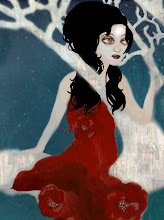
member of:Observers of the Interdependence of Domestic Objects and Their Influence on Everyday Life


This group has been active for a long time and has already made some remarkable assertions which render life simpler from the practical point of view. For example, I move a pot of green color five centimeters to the right, I push in the thumbtack beside the comb and if Mr. A (another adherent like me) at this moment puts his volume about bee-keeping beside a pattern for cutting out vests, I am sure to meet on the sidewalk of the avenida Madero a woman who intrigues me and whose origin and address I never could have known...
--Remedios Varo


(Slideshow is of Artwork by Remedios Varo)
By believing passionately in something that still does not exist, we create it. The nonexistent is whatever we have not sufficiently desired.
--Franz Kafka

Showing posts with label foucault. Show all posts

Tuesday, May 11, 2010

The Little Blue Ship

the little blue ship

The Little Blue Ship

So, one of the things that has kept me busy over the past month is the development of a website, which will be located at www.littleblueship.com. It’s not ready yet, so no need to follow the link, as nothing’s there... The image, however, and the explanation of the name, are here. **Update! The page is live!

Since 2000 BC, people have hauled boats on carts through town for festivals led by questionable kings. The Ancient Greeks honored Dionysus, the god of wine and ecstasy, the Romans called in the New Year with their version of the same god, Bacchus, and the Teutons honored their fertility goddess, Nerthus. During the times of slavery, it was a slave who headed the ship, worshipped as King for the day, in an act that turned the world upside down in much the same way revelers do now during the Mardi Gras parades. From as early as 1135, this ship became known as the Blauwe Schuit, the Blue Barge, and it became filled with marginally criminal refugees who had banded together as a Guild, normally the standard of ethical conduct and workmanship for a particular trade, and let loose in an otherwise unacceptably sinful and raucous celebration.

By the end of the Middle Ages, there was another use for such a ship.

"In 1517 Luther nailed his theses to the door of the church in Wittenberg. He, like other protagonists of the Reformation, doubted the value of good deeds as a ticket to heaven. The insane, together with the cripples and beggars to whom one could also demonstrate one’s brotherly love, thus lost their religious worth. From being necessary, they now became undesirable. They began to be cast out.
The number of prisons grew, and workhouses were introduced, where the mentally ill were shut up alongside thieves, beggars and those unwilling to work."--16th Century Paintings, by Rose-Marie and Rainer Hagen

Around this time, Hieronymous Bosch painted his famous Ship of Fools, and a mythology grew up surrounding it of ships like that one, floating down all the major rivers, carrying the mad, the impoverished, and the unwanted from shore to shore, always rejected and pushed back out to sea. Foucault used that image, and the records of a few incidents in the Germany of the 1400s which gave credence to that mythology, to explore the idea of the liquid form of madness, the mind adrift, the man outcast and lost in the “moving chaos” of the unknown territory beyond the established boundaries of civilization. And Foucault had, of course, his own understanding of what was to be called “mad--” in his writings, he often pointed out that what was crazy to one person, in his society, was old hat to another, in a society far, far away. For example, in the preface to his book The Order of Things, he writes:

"This book first arose out of a passage in [Jorge Luis] Borges, out of the laughter that shattered, as I read the passage, all the familiar landmarks of my thought—our thought that bears the stamp of our age and our geography—breaking up all the ordered surfaces and all the planes with which we are accustomed to tame the wild profusion of existing things, and continuing long afterwards to disturb and threaten with collapse our age-old distinction between the Same and the Other. This passage quotes a ‘certain Chinese encyclopaedia’ in which it is written that ‘animals are divided into: (a) belonging to the Emperor, (b) embalmed, (c) tame, (d) suckling pigs, (e) sirens, (f) fabulous, (g) stray dogs, (h) included in the present classification, (i) frenzied, (j) innumerable, (k) drawn with a very fine camelhair brush, (l) et cetera, (m) having just broken the water pitcher, (n) that from a long way off look like flies’. In the wonderment of this taxonomy, the thing we apprehend in one great leap, the thing that, by means of the fable, is demonstrated as the exotic charm of another system of thought, is the limitation of our own, the stark impossibility of thinking that."

Which leads us back again to the ancient practice of drawing a ship through town--on wheels--led by those who are usually not heard from, not listened to, even, often, not looked at. On that ship, on that day, they are kings and queens, and they may be happy, and wealthy, and wise. The custom is a reminder that all that we see as solid and normal is, in fact, fluid and changing, both in time and space. What we find ridiculous and hideous now, for example (slavery included), was not to be questioned once upon a time. And the burka tells us something about the role of space (the boundaries of a culture). And now modern physics tells us that solid matter itself is not solid at all, and that much of what we see, we have simply decided to see, our culture and upbringing have taught us to see--and it may not be there at all. I’ve written here before about the passing gorillas we miss when it’s been implied that their presence is unimportant. So, this one day of the year--couldn’t it be more?

During World War II, Hendrik Nicolaas Wekrman established the journal The Blue Barge with three other friends. They printed, among other things, tales from Martin Buber’s Legend of Baal-Shem, illustrated by Werkman, as a direct act of resistance and a source of inspiration to those suffering under the Nazi regime. For his efforts--his artistic efforts--Werkman was executed by firing squad April 10, 1945.

The Legends of Baal-Shem includes an entire section entitled “Ecstasy,” in which it is said: “In ecstasy all that is past and that is future draws near to the present. Time shrinks, the line between the eternities disappears, only the moment lives, and the moment is eternity. In its undivided light appears all that was and all that will be, simple and composed. It is there as a heart-beat is there, and becomes perceptible like it.” Here, ecstasy is paradise, and those that insist on the renunciation of joys in this world also will not enjoy them in the next--is that not the renunciation of paradise? and so the mad who are lost in the fevers of ecstasy are closer to god than we are....

The Blue Ship, then, symbolizes all that we do not understand but which brings joy; unbridled passion, the creative instinct, the explosion of insight in a moment of thinking “outside the box.” It is also rebellion, revolution: it is hope where hope seems lost, and joy where joy has been forbidden. It is the creative act, opening a door where once there was a wall.

the driver and his castle

In this Blue Ship, Agwe stands at the helm, steering the wheeled ship through time. From somewhere underneath his collar, the stairs rise up to enter the castle of his hat, where a princess waits, and where we get the first hint that he might be facing the wrong way, as the ship’s masthead is holding her torch in the opposite direction. On the other side of the ship, Erzulie lovingly faces the direction her husband suggests, but her eyes slide to take note of the wise owl that pulls them via a ribbon of clouds, the other way.

Center stage is the Tree of Life, the Tree of Enlightenment, the Germanic Yggdrasil, which holds heaven and earth together. It is the crossroads between the living and the ancestors, between the devotee and the Voodoo Loa; it is the seat of Legba, who must be called on first before any other deity can be contacted.

Agwe’s boat is made, filled with treasures, and pulled on wheels through town and all the way to the water’s edge, where it is offered to him and his wife, Erzulie. I have talked about them here many times before, so I won’t repeat myself, but here I am remembering that Erzulie herself requires, on her sacred days, that we forget the logic of economics and the limits of poverty, sprinkling expensive perfume on the ground, cooking lavish meals, wearing and offering finery and jewels. She requires that we take the time to make ourselves beautiful, to make our offerings beautiful, to remember that each motion and act is an art, more of an art than the finished product, and that it matters to take the time to make something gorgeous.


"Her generosity is so natural that one is caught up in her exuberant innocence, believing, with her, that all is good, is simple, is full-blown. It is in order to feel this that the serviteur indulges her extravagant demands, for if what is so difficult for him is so normal for her, that very fact confirms the existence of a world in which his difficulties do not occur... He conceives of Erzulie as fabulously rich, and he neither inquires into nor explains the sources of this limitless wealth, as if by such disinterest he becomes himself freed from concern with sources and means. He shares her impatience with economies, with calculation...Erzulie moves in an atmosphere of infinite luxury, a perfume of refinement, which, from the first moment of her arrival, pervades the very air of the peristyle, and becomes a general expansiveness in which all anxieties, all urgencies vanish. The tempo of movements becomes more leisurely, tensions dissolve and the voices soften, losing whatever aggressive or strident tones they may have had. One has the impression that a fresh, cooling breeze has sprung up somewhere and that the heat has become less intense, less oppressive." --Maya Deren

Erzulie turns the world upside-down in this way: she brings ease and luxury and peace through the sheer, innocent expectation of them. And she rides away on this little blue ship, where we don’t internalize the order and logic of society, where we are not limited by time or space, and where we can go in many directions at once and never be lost.

Tuesday, June 30, 2009

Perceived Reality, Part IV: Don't Let Dullards Interfere with Your Ability to See

listen:there’s a hell
of a good universe next door;let’s go
—e.e.cummings

From codex seraphinianus


"Discover for yourself, reader, such wonders as the purple-caged citrus, the spider-web flower, the parfait protea, and the ladder weed. This is a world inhabited by weird half-sentient flora such as the tadpole tree and the meteor-fruit, by the lacy flying-saucer fish, the wheeled caterpillar-rumped horse, and the metamorphic bicranial rhino. The planet’s sentient species are here as well—races like the Garbage-Dwellers, the Road-Traffic and the Yarn People, and the exotic Rodent-Skin Wearers… Nor can we forget to mention the Homo-Saurians, whose unusual sexual life-cycle is graphically described." (From the inside jacket of the Codex Seraphinianus)


In 1940, Jorge Luis Borges wrote Tlon, Uqbar, Orbis Tertius, a fascinating account of the accidental discovery of an irregular addition to volume XLVI of a set of encyclopedias. The addition described the language, arts, geography, and history of an otherwise seemingly non-existent country, Uqbar, and its discovery left its two readers completely flummoxed. After a passage of time, the narrator happens upon another odd text, this time an entire volume which seems to have no twin in the world, and this time the entire book is devoted to the description of a planet, Tlön. He tells us:

(translations to English from http://www.coldbacon.com/writing/borges-tlon.html)
"Two years before I had discovered, in a volume of a certain pirated encyclopedia, a superficial description of a nonexistent country; now chance afforded me something more precious and arduous. Now I held in my hands a vast methodical fragment of an unknown planet's entire history, with its architecture and its playing cards, with the dread of its mythologies and the murmur of its languages, with its emperors and its seas, with its minerals and its birds and its fish, with its algebra and its fire, with its theological and metaphysical controversy. And all of it articulated, coherent, with no visible doctrinal intent or tone of parody."


From codex seraphinianus


He goes on to describe some of the characteristics of this planet, for example the languages of the northern hemisphere, which are based almost entirely on the "monosyllabic adjective. The noun is formed by an accumulation of adjectives. They do not say "moon," but rather "round airy-light on dark" or "pale-orange-of-the-sky" or any other such combination. In the example selected the mass of adjectives refers to a real object, but this is purely fortuitous. The literature of this hemisphere (like Meinong's subsistent world) abounds in ideal objects, which are convoked and dissolved in a moment, according to poetic needs. At times they are determined by mere simultaneity. There are objects composed of two terms, one of visual and another of auditory character: the color of the rising sun and the faraway cry of a bird. There are objects of many terms: the sun and the water on a swimmer's chest, the vague tremulous rose color we see with our eyes closed, the sensation of being carried along by a river and also by sleep. These second-degree objects can be combined with others; through the use of certain abbreviations, the process is practically infinite. There are famous poems made up of one enormous word. This word forms a poetic object created by the author."

From codex seraphinianus


In a postscript to the story, the narrator explains that new information has come to light, clarifying some of the mysteries surrounding the planet Tlön. A written confession has been discovered, detailing the existence of a secret society through several generations which sought to prove to a, in their eyes, "nonexistent God that mortal man was capable of conceiving a world." In a creepy turn of events, objects begin to appear which corroborate the actual existence of the planet, the first such object a compass with Tlön script on its metal case. Such intrusions of fantasy into the real world escalate until finally, the history of Tlön is being taught in the schools, Earth's science and archeology--its memories-- are being pushed aside for their Tlön counterparts, and the children are being taught to speak the language of Tlön. The story becomes a completely peaceful takeover of the planet Earth by a non-existent alien race.
From codex seraphinianus


From codex seraphinianus


From codex seraphinianus


In 1976, Italian artist Luigi Serafini began work on just such a project--though I make no claims as to his hopes for a takeover of the planet. It is a masterfully illustrated encyclopedia of an unknown planet, with each illustration described, detailed, and explained in an unrecognizable alphabet. The alphabet has defied the attempts, so far, of linguists to break its code, even though a Rosetta Stone is given in the book--to another unknown language. According to Wikipedia, "Serafini has stated that the script of the Codex is asemic, and that his experience in writing it was closely similar to automatic writing." Though the writing has yet to be deciphered, many studies of it have been made. There is, for example, a brief analysis on the page (http://www.math.bas.bg/~iad/serafin.html):

"Which brings us back to the writing system. (I'm only discussing words written in majuscules here -- titles of chapters, sections, subsections and paragraphs, for the most part.) Several dozen different characters appear in them, far too many for the writing system to be an alphabet, and there are too many long words for it to be a syllabary. Some characters occur very many times, others only once or twice.
What is even more striking, however, is the tendency of the characters, even the less frequent ones, to reoccur within the same word or group of words (e.g., within the titles of the various subsections and paragraphs in a section). If a character occurs in a word at all, there's a good chance that it occurs there at least twice -- perhaps thrice in a row (which is next to unseen in any sort of phonetic writing system), up to six times altogether. It is as if the headers of most pages in an English book were such words as bookkeeper, googol, grammar, Ouagadougou and Wassamassaw. "


The numbering system has been deciphered. Meaning, it is an actual working system, though completely foreign to us. It is explained fully on the same webpage, with a few added notes:

"Telefol counting starts with the fingers of the left hand (1 being the pinky), progresses from the thumb (5) to the wrist, lower arm, elbow, upper arm and shoulder (6--10), the side of the neck, ear and eye (11--13) and thence through the nose (14) and right eye (15) to the right pinky finger (27). The Telefol idea of a very large number is kakkat=14*27=378. "

The book is filled with fantastic images.

The structure of the book is as follows:

"The Codex is divided into eleven chapters, partitioned into two sections. The first section appears to describe the natural world, dealing with flora, fauna, and physics. The second deals with the humanities, the various aspects of human life: clothing, history, cuisine, architecture and so on. Each chapter seems to treat a general encyclopedic topic. The topics of each separate chapter are as follows:

* The first chapter describes many alien types of flora: strange flowers, trees that uproot themselves and migrate, etc.

From codex seraphinianus


* The second chapter is devoted to the fauna of this alien world, depicting many animals that are surreal variations of the horse, hippopotamus, rhinoceros, birds, etc.
From codex seraphinianus


From codex seraphinianus


* The third chapter deals with what seems to be a separate kingdom of odd bipedal creatures, apparently engineered for various purposes.
* The fourth chapter deals with something that seems to be physics and chemistry, and is by far the most abstract and enigmatic.
* The fifth chapter deals with bizarre machines and vehicles.

From codex seraphinianus


From codex seraphinianus


* The sixth chapter explores the general humanities: biology, sexuality, various aboriginal peoples, and even shows examples of plant life and tools (such as pens and wrenches) grafted directly into the human body.


* The seventh chapter is historical. It shows many people (some only vaguely human) of unknown significance, giving their times of birth and death. It also depicts many scenes of historical (and possibly religious) significance. Also included are examples of burial and funereal customs.
* The eighth chapter depicts the history of the Codex's alien writing system.
From codex seraphinianus


* The ninth chapter deals with food, dining practices, and clothing.
* The tenth chapter describes bizarre games (including playing cards and board games) and athletic sports.
From codex seraphinianus


* The eleventh chapter is devoted entirely to architecture."
(FROM WIKIPEDIA, with images inserted from various sites.)


On the page http://www.believermag.com/issues/200705/?read=article_taylor, Justin Taylor claims:
"As a book-object...the Codex’s only real precursor [!] is The Voynich Manuscript. Discovered by the Polish book collector Wilfrid M. Voynich in a wooden chest at an Italian Jesuit college in 1912, the heavily illustrated manuscript was worked on by top code-crackers during World War II. They failed. It’s never been deciphered. Theories on its origin and significance abound, including the theory that the manuscript is a fraud perpetrated by Voynich himself, but the most popular and conclusive theory attributes the work to Roger Bacon, the medieval Franciscan friar who, in his Letter Concerning the Marvelous Power of Art and Nature and the Nullity of Magic, noted that 'certain persons have achieved concealment by means of letters not then used by their own race or others but arbitrarily invented by themselves.'”


One thing should be pointed out here: the author of this codex is still very much alive. Meaning, we could have a full translation and explanation any day now. But I don't think we will.

From codex seraphinianus


According to Shelley Jackson, author of Patchwork Girl,
"It’s important that it bothers you with the feeling that there is some content that you ought to be able to extract from it in a normal discursive kind of way. It’s meant to appeal to the rational or exegetical urge. It wants to be interpreted but it won’t let you, and it’s very interesting the way it teasingly asks to be read and then refuses. You could see this as a really really elaborate inkblot. It’s never going to completely yield to you in the sense of giving you insight into the artist’s intentions, so it kind of reverts you back on yourself and makes you notice what you’re noticing and notice the associations that you make. It’s a kind of springboard for your own creative musings.”


And I think that's key: your own creative musings. Keep that in mind for a minute.

Several years ago, there was an experiment run by a psychologist named Daniel Simmons. He showed the test subjects a video of groups of guys in black shirts and white shirts, tossing basketballs back and forth to each other on a court. He told the subjects to count the number of times a basketball got passed between the guys in white shirts. Halfway through the video, a gorilla-suited woman walked across the basketball court, and hardly anyone noticed. Why? Because they'd already been told what the important information was. How do you miss a gorilla? By working from a framework that causes your subconscious to discard the presence of the gorilla as unimportant information, before its presence even registers in your subconscious. And this experiment has been repeated many times, in various places, with the same results.

So I'm going to end here by pointing you back to the Foucault quote in my sidebar, where he refers to an excerpt of another Borges work, these quotes together reminding me of the importance of exposing yourself to as many outlandish and impossible modes of thinking as possible, and as often as possible, in order to erase more and more of the boundaries and limitations on your own system of thought, and thus your own ability to see all the gorillas that might be passing in front of you.

The Codex Seraphinianus is today's offering.


Note: YouTube user shivabel has uploaded this lovely, generous video of a large excerpt from the Codex Seraphinianus, showing you many, many more of the fantastic illustrations. The video is set to music by Penguin Cafe Orchestra: