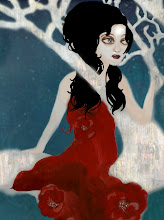
member of:Observers of the Interdependence of Domestic Objects and Their Influence on Everyday Life


This group has been active for a long time and has already made some remarkable assertions which render life simpler from the practical point of view. For example, I move a pot of green color five centimeters to the right, I push in the thumbtack beside the comb and if Mr. A (another adherent like me) at this moment puts his volume about bee-keeping beside a pattern for cutting out vests, I am sure to meet on the sidewalk of the avenida Madero a woman who intrigues me and whose origin and address I never could have known...
--Remedios Varo


(Slideshow is of Artwork by Remedios Varo)
By believing passionately in something that still does not exist, we create it. The nonexistent is whatever we have not sufficiently desired.
--Franz Kafka

Showing posts with label cat. Show all posts

Thursday, May 17, 2012

Eidetic Image III, Ars Memoria, and Cats


This is my little prince, Haruki, named after the author Haruki Murakami:


(Laughter is the Best Medicine, photo by Gabriel)

He has also modeled for me often.
And this is my first attempt at a lino print:


Cat in Blue Moonlight


And while I'm posting about excellent medicine, I would like to share an interview I stumbled across from Ode Magazine between Jurrian Kamp and Biologist Bruce Lipton. The discussion centers around the change in Lipton's studies from being centered around a belief in the power of genetics to shape our lives (fate in terms of behavior and physical health) to being centered around the idea that not just our environment, but more how we perceive our environment shapes our lives (again: both physical health and behavior) Kamp explains Lipton's studies:

Lipton’s discoveries are part of an emerging new biological paradigm that presents a radically different view of the evolution of life: epigenetics. Epi means “above” in Greek, so epigenetics means control above the genes. 'It turns out that as we move from one environment to another environment, we change our genetic readout,' Lipton says. 'Or if we perceive that our environment is not supporting us, then that perception also changes our genetics.' 

So, following the ideas in posts I and II on this topic, he's defining the underlying 'image' we carry around in our deep subconscious which explains what we can see of this world, what we will miss, our health, our happiness, wars, famine, and violence (yes!) as DNA. His "picture" is, in fact, a coded sequence. That coded sequence may have a gene in it that practically guarantees cancer. So that's the fated outcome of that picture. Then it becomes sort of an emergency to change the picture, yes?


We are masters of our genetics rather than victims of our hereditary traits. Our fate is really based on how we see the world or on how we have been programmed to experience it.


Again, his science supports the idea we have seen in other belief systems that for some reason, you tend to produce your underlying image before the age of five: 

...neuroscience reveals a startling fact: We only run our lives with our creative, conscious mind about 5 percent of the time. Ninety-five percent of the time, our life is controlled by the beliefs and habits that are programmed in the subconscious mind. You may hold some positive thoughts but that has very little influence on your life because of the limited amount of time you actually run with your conscious mind.”
Kamp says: "Lipton explains that there is a good reason for the automatic “playback” function of the subconscious mind. As children, we learn to walk. While we do so, our lives are determined by the process. It takes all our energy and attention. The same happens when we learn to drive later in life. But once we have acquired these new habits, the subconscious mind automates the procedure. Whatever seemed almost overwhelmingly difficult at one point now is simple. We don’t even think about it anymore when we put one foot in front of the other or drive home from work.
However, we don’t just record simple motor functions like walking or driving. In the same way, we also record perceptions and behaviors. And we do most of this recording in the womb, during the second trimester of pregnancy, and during the first six years of our lives. “The fundamental programs in your subconscious mind are not your own wishes and desires,” Lipton points out. “They are behaviors you copied from other people, primarily your parents and your family and community. Your beliefs are actually their beliefs, their wishes and desires. You are ‘playing’ behaviors that were downloaded into you when you were a small child. And it is not very likely that these behaviors are what you are looking for today. You are sabotaging yourself!


He explains that this automatic behavior is not something you can talk to or reason with; we have all, I'm sure noticed that we can make the same 'realizations' about how we should feel or behave in a certain circumstance over and over without it ever actually happening. That's because those beliefs are recorded well below logic, in an emotive memory--I believe a more symbolic memory. We have to speak to those symbols, find them and move them around, in order to have the impact we want. 

Mr. Lipton suggests that there have been good results in this sort of thing using hypnosis or subliminal tapes; in his own book (Biology of Belief), he outlines a simple technique he calls PSYCH-K which he claims has profound results.

He also makes another interesting point about health that matches what dream theory tells us. That point is about the cohesiveness of reality. He explains that what we perceive as an individual, a person, our 'self', is really a community of some 50 trillion or so cells. And the extension of that is that really, each of us is a cell in one "giant collaborative superorganism." He calls what we are doing to each other with crime, terrorism, violence, and theft, is nothing more than an autoimmune disease: the body fighting itself in a senseless act.

But most interesting about his article was that, just like in the example used in the Second Post on this topic, Dr. Lipton uses love as the re-creator of the 'universe' as you know it.

Kamp (the interviewer) explains: "When we fall in love, our conscious minds, with our wishes and desires, are running almost full-time--not 5 percent of the time, but 95 percent. That condition can be life-changing." This is what Lipton calls the honeymoon effect--those moments when the universe is heaven, because we are creating it from desire, instead of passively watching it from the cage created by the disempowering beliefs of an utterly dependent child subconsciously soaking in the fears and angers of the adults around him in an attempt to stay safe.

Mariiiiiiiia!!!!


Another excellent discovery which continues in this vein and links it to another topic I've explored here, Ars Memoria (here, here, here and here ...not exhaustive :P) is this TEDtalks video of Joshua Foer on memory. He reminds us that memories (like the one of Maria) make us who we are. They build upon that basic, defining image you have and solidify it (because you're perceiving your experience of living through the holograph of that image), give it new symbols to work with--basically each memory becomes an extension of visual vocabulary.

Here's the thing: by 'outsourcing' our memory skills to devices, we make ourselves even more passive 'participants' in our own lives.  I think here about how a cat finds his way home without GPS or Google Maps, even when you've accidentally let him out of your car somewhere halfway across the country when you got out to get gas, somewhere he/she had never been before.  Why can't we find our way out of a small forest if we stumble off the beaten path? 

When you're active about your memory making, especially when you're using this 'memory palace' technique Foer describes (an ancient technique, outlined also in earlier posts under Ars Memoria), you are actively placing symbols in the structure that symbolizes your 'self' to your mind: the palace, your home. Now, to some extent, those symbols, and what you are inclined to do with them, are going to be led by your genetic code, your childhood-created, subconscious image defining the world and the relationships and movements that can be made within it. A trick that memory champions use to subvert that--a trick that goes way back past the ancient Greek practitioners--is to posit ridiculous, senseless objects, characters, and relationships to undercut your natural tendency to adhere to your previously defined, underlying logic.  The ancients felt that if you perfected these memory techniques, you would have something akin to magical powers; you would be able to magically alter the world around you. I would posit that you would be altering your perception of what is possible--you would be altering what you could see. When Einstein labeled certain events 'spooky action at a distance,' he was talking about actions which had results that could not be explained, mainly because we are not able to see all the teeming, shivering atoms that make up the universe. Everything is touching. If you could see those atoms, the action wouldn't seem so spooky. In this video, Joshua Foer talks about 'elaborative encoding,' and tells us that the distinctions noted in brain studies of memory champions were not in size or structure but rather in the fact that they were using spacial recognition areas of the brain when memorizing information (for example, lists of numbers)--meaning, again, image and also spatial relationship between images: just like that secret, subconscious, not fully-understood, explored, or even recognized Palace your mind created before you turned five. In the video, he walks you through some techniques to do some heavy remodeling in that memory palace, and therefore, if all this follows, some heavy remodeling of the planet.

Enjoy!

Wednesday, February 15, 2012

Ailuromancy

The Detectives and their Pet

Maquettes by Zoe

Photos by Gabriel

Ailuromancy is one of many, many 'mancies' (see a seemingly endless list HERE), methods of divination which rely on careful attention to some aspect of one's surroundings to explain present, past, and future. Ailuromancy is divination based on the study of the actions of a cat.


There are various listings of what a white cat or a black cat have to be doing to bring good luck or what is a warning, or what signals rain, etc. Many of the actions seem rather mundane and regularly practiced during a cat’s routine day--cleaning her left paw, for example. What cat would leave the left paw dirty until she thought it was about to rain? So I decided to step in with some observations of my own. Always remembering (as I will mention again later, with Schrodinger’s cat) that the observer is the one making connections between cause and effect...And my observations have been made, in this particular case, via a study of the behavior of the above three blue cats.

If a Blue Cat Interrupts your Step...

If a Blue Cat is Intent on Flying...

If a Blue Cat Kisses You


Similarly, there is a method of divination called Ambulomancy, divination by walking around. If you're looking at the sky, there is Aeromancy, where atmospheric conditions are read for meaning; Apantomancy "is a form of divination using articles at hand or things that present themselves by chance. The diviner works him/herself into a state of trance until an object or event is perceived and a divination worked out. A branch of Apantomancy places special significance on chance meetings of animals." (Wiki/ The Element Encyclopedia of the Psychic World).
That particular mancy is just like dream interpretation but while awake. According to Buckland, in his Encyclopedia of Divination and Soothsaying: "A chance meeting with a chimney sweep, for example, could be taken as indicative of some future event, as could opening a drawer and unexpectedly seeing a magnifying glass. (The augurs of ancient Rome would include such things as the fall of a stick in a temple, the squeak of a mouse, stumbling, or sneezing.) The way in which these objects and people are interpreted would depend entirely on the diviner"--going back to the idea that you are creating the objects and occurrences around you as you observe them. Recently, I became lucid in the middle of a dream while standing in a very tall-ceilinged bathroom. It struck me as incredible that my mind had bothered to create such an amount of colorful detail in the patterns of the tiles on the floor and walls. When you look at your desk and see crumbs, are they meaningful to you? No. But why would your dreaming mind bother to put them there? And if it does, don’t they necessarily have meaning? I was unable to follow this thought further into the dream, however, because at that moment, my cat pounced on me, waking me up.


If a Blue Cat Stops You in the Street...

According to the Encyclopedia of Divination, there is also Alveromancy, which studies sounds for their meaning. They list ocean waves, wind blowing, echoes or bird calls, but the idea brings to mind the paradigm-shifting sounds of shamanic drumming and that amazing song "I Put a Spell on You", specifically as sung by Nina Simone...


Occultopedia states: "The ancient Egyptians believed sound was a direct channel between humanity and the gods. They also thought that the practice and use of sound in the words and names of scripts revealed the real mystery of magic and prophecy." The power of the real name of god, spoken aloud; chanting, the particular order of words in a spell: "Proper pronunciation and recital of magical script was one of the most important principles in ancient working magic and divination...According to Herodotus, the Peleiades--sacred women priestesses of Zeus and the Mother Goddess, Dione, at the Oracle in Dodona--received prophetic signs and omens from the sounds and noise caused by the movement of the foliage of the sacred oak outside the temple. At this same Oracle another form of Alveromancy was also performed, as diviners listened and interpreted the murmur made by a miraculous fountain.”

Our detective is listening to the voices of his cats, of course.

Across the world, there are a variety of "Devil's Bridges," amazing or particularly difficult constructions rumored to only have succeeded by a deal with the devil--the exchange being the soul of the first one to cross the bridge (a new crossing over previously uncrossable space, and the dangers of being the first to step off of what was previously the edge of the earth--it’s easy to see how this idea developed). In many of these stories, the people tried to circumvent the devil by sending an animal across first, and in one particular case, that animal was a cat. The devil, furious, nonetheless went to claim his soul, but the cat shredded him and fled, thus both protecting the townsfolk and saving his own soul. The cat can see in the dark, cannot be deceived, is good at sneaking up on you (unless she is a hungry siamese, which you can hear for miles:)), and excels at catching rats, so she makes an excellent detective herself.


I thought it might be fun if everyone posted in the comments what a certain action by a Blue Cat might 'mean'. Go on, be diviners! There are some suggestions here, but you know cats can get twisted up in any position, can suddenly and inexplicably go berserk or, conversely, they can be the calmest one in the room (also inexplicably). So, go wide. 


If a Blue Cat Offers to be a Scarf...

**Update:
Apparently, these aren't even the first cat detectives. You can read about a real one, Fred the Undercover Kitty, who even won medals for his service, here.
:D

Monday, February 28, 2011

The Art of the Cat

“They made profound bows before her [the Cat] and said: ‘We all wish you to divulge your secrets for our benefit.’ The grand old cat answered: ‘Teaching is not difficult, listening is not difficult, but what is truly difficult is to become conscious of what you have in yourself and be able to use it as your own.’”
--From The Swordsman and the Cat (from a seventeenth
century master’s book on swordplay; my source: Book of
Symbols, p. 300).


(photo by Arturo Ghergo)

Leonor Fini’s life began almost immediately as a creative, theatrical endeavor of clever attempts to thwart the terrifying incursions of a shadowy force. When she was barely a year old, her mother fled the oppressive ogre of her husband and his Buenos Aires to take her infant to her own homeland of Italy. But the distance was not enough; her father, his ego slighted, sent agents across the ocean to snatch her off the streets. Leonor remembered the moment, thankfully interrupted by attentive strangers, well into the last years of her life, when she recounted it to Philip Wells : “I was walking down the street in the perfectly normal vertical position of a child moving, and suddenly I was taken in someone’s arms and found myself in a horizontal position. This frightened me very much, and the fear stayed with me for many years after. As a child I felt constantly in the shadow of some dark obscure menace.”(Sphinx, The Life and Art of Leonor Fini)

She couched that dark menace in mythic, but manageable, terms, as “one of those spirits from Assyrian bas-reliefs: terrifying, implacable, and very bogus, all at the same time” (Sphinx). And instead of hiding away inside, she went about her childhood passing as a boy until she was five or six years old. This habit of pretending to be someone else turned from a necessity into a favored past-time, well-fed by the yearly carnivals and masked pageants of her town. As an adult, she was famous for her costumes—both the ones created for theater and ballet and those she created for herself, which she wore to any event she could find. “To dress up is to have the feeling of changing dimension, species, space. You can feel like a giant, plunge into the undergrowth, become an animal, until you feel invulnerable and timeless, taking part in forgotten rituals…I have always loved—and lived—my own theatre…To dress up, to cross-dress, is an act of creativity” (Sphinx, The Life and Art of Leonor Fini).


Above photo by Eddy Brofferio


Above photo by Andre Ostier


Horst

Another childhood difficulty she turned into magic was a temporary but lengthy blindness, suffered in her teens. For two months, Rheumatic conjunctivitis left her with her eyes bandaged, and the images that filled her mind were turned into marionettes and sculptures as well as paintings in a flood of activity as soon as the bandages were removed. Her obsessive focus, coupled with her expulsion from school, led to her mother’s concession to her daughter’s artistic dreams (Women as Mythmakers).


Timpe, Timpe, Timpe Tare


Voyage sans amarres


Le Carrefour d'Hecate


As a child, Leonor lived in a large household, with her mother, her grandparents, an uncle, a governess, a servant and, most importantly, a white Angora cat. Her close relationship with Cioci the Angora was the first of many, and as an adult, Leonor preferred to live this way—with many people, and with even more cats; at one time as many as 23 Persian cats shared her home and her bed.


Chats a Cornes


Visage


Cats have always played a significant role in art history; recently Sapphire wrote a fabulous post on traveling cat-painters of the Edo period in Japan who would go door to door selling paintings of cats to rat-proof the home. These paintings were to serve as protection for the hours of the day when the real-live cats were out patrolling other territories. She shows many lovely Ukiyo-e prints of cats in the post. Much later, in England, a little black kitten guided Alice into the world beyond the Looking Glass and back again.


French Cat Devil from Life Magazine
("Underneath the fanciful feline mask above is a Parisian surrealist painter named Leonor Fini who is also known for her passion for weird hats, skeletons and Persian cats. In headdress and bright red satin gown, Leonor attended an artists' ball in Paris on June 19 as an eye-catching cross between a cat and a devil." from the magazine Life, July 12, 1948)

In her review of the history and meaning of cats in art history in The Book of Symbols, Kathleen Martin says: “From the moment they [cats] first emerged from the wild and forged their wary affiliation with human beings, they have largely defined the terms of their self-domestication.” This power of self-definition may be where the symbolic importance of cats in Fini’s work finds its source: both in the general social arena, where women were pretty heavily domesticated second-class citizens, and in the Surrealist arena [which Fini emphatically refused to completely identify with], where females were permitted only the two roles of muse and femme-enfant, the desire to be one’s own woman, to grow into herself, and to forge relations with others as she saw fit must have been overwhelming.

Domestic? She’s sewing, but it’s magic…

And in fact, for most of her life, Fini lived with two men (though not always the same two): “one…who was rather a lover and another who was rather a friend. And it always worked” (Wikipedia). They would share her home with other friends and her, on average, 17 cats, all 17 of whom were given the respect they demanded: “They shared her bed and, at mealtimes, were allowed to roam the dining table selecting tasty morsels—and woe betide the guest who complained” (Wikipedia)…

According to Dorothea Tannin in Between Lives: An Artist and Her World, "You had to love Leonor a lot (I did) to put up with the cat miasma that accompanied whatever perfume drifted through her beautiful rooms on any given evening..." --an idea she connects to an amazing capacity for self-definition on the same page: "If ever there was a resolute 'dream world,' Leonor Fini lived there and managed, amazingly, never to leave it. In a conversation about a current movie...she said, primly, 'Kot'--one of her two male companions--'says I shouldn't see it. Ce n'est pas adapte a moi' (It isn't adapted to me).'"


Photo by Pilon?

Leonor, whose name means lion, who traveled Europe by car with 17 of her little lions… And lions, in Egyptian mythology, with their glorious manes, were representatives of the sun and the guardians of its rising and setting—and therefore of “the creative energies of dissolution and becoming” (Book of Symbols). Leonor created a whole series of her own Guardian paintings: tall, pale goddesses created especially for the task, often, of watching over destruction and creation. In La Gardienne des Fenix, a gorgeous woman in a flame-colored robe looks out over a wasteland, the fires of destruction, or sunset, or sunrise—it’s not clear—glowing from the distant horizon. She is surrounded by Phoenix of varying ages, from barely visible inklings of a future creature to the skeleton of a bird already passed.


La Gardienne des Fenix

And here, again, a Guardian, the very personification of the sun in her pale yellow gown budding forth beneath clear-sky robes, sits calmly in the midst of a destroyed landscape: she is an emerging sun in an emerging sky—she is life itself in the midst of death, re-creation. In each of these paintings, she holds the alchemical egg, a perfect sphere with everything that is needed for life tucked inside it:


Another major theme in Leonor’s painting was the Sphinx: half-cat, half-woman, often winged, sometimes not, this creature is a mysterious, incredibly flexible (unbreakable) guardian or sentry in its own right. Below, the full breasts and long, graceful neck of a woman grow out of a feline body—the face of a beautiful woman surrounded by a lion’s mane…


Etudie pour Portraits de Famille


Italy’s piazzas were full of stone, larger-than-life, triumphant female guardians in the guise of the caryatids holding up its formidable architecture and also sphinxes flanking entrances and gates. As a child, she often sat upon the Sphinxes Maximilian had brought from Egypt which guarded the entrance to Miramar Castle.

“Among the Egyptians, sphinxes were placed at the entrance of the temple to guard the mysteries by warning those who penetrated within that they should conceal a knowledge of them from the uninitiated. Champollion says that the sphinx became successively the symbol of each of the gods…which…suggests that the priests intended to express the idea that all the gods were hidden from the people, and that the knowledge of them, guarded in the sanctuaries, was revealed to the initiates only” (Wikipedia).

So again, the cat-like creature that guards the mysteries of our creation and our destruction, that guards mystery itself, shrouding it from the eyes of those unmotivated to the struggle “to become conscious of what you have in yourself and be able to use it as your own.”


Golden Sphinx


Sphinx for David Barrett.


Self-Portrait
…


Friday, July 9, 2010

Lost Race Found


I thought I had finished this painting a while ago, but this week I've been working on it again...


Several times lately, some animal thought to be long-extinct is discovered in some far-off region of the world, doing just fine. This is a moment like that: Plato's Lost Race, the pre-human hermaphrodites, split in half by the gods in punishment for arrogance, each half condemned to wander the Earth in a seemingly endless search for completion. Here they are, she-he tends the roots and he-she the branches, on swampy, newly forming ground. The proud peacock watching carefully overhead. (Cats are just always necessary.)

Friday, September 4, 2009

Lost Race Found

Lost Race Found

(to see large, follow the link)

Several times lately, some animal thought to be long-extinct is discovered in some far-off region of the world, doing just fine. This is a moment like that: Plato's Lost Race, the pre-human hermaphrodites, split in half by the gods in punishment for arrogance, each half condemned to wander the Earth in a seemingly endless search for completion.
Here they are, she-he tends the roots and he-she the branches, on swampy, newly forming ground. The proud peacock watching carefully overhead. (Cats are just always necessary.)


Note: This is a new experiment for me.I've been working on this drawing for a while, but I grew furious with the sky and dropped it. Finally, I discovered "free textures" on the flickr page of les brumes, and I borrowed this texture. I photoed my illustration and put it into photoshop, then I made some little changes in the texture I had borrowed and put it over the sky at 57%, and found myself much happier. So, thanks les brumes!